Rosemary Dijon Chicken
Jan 07, 2026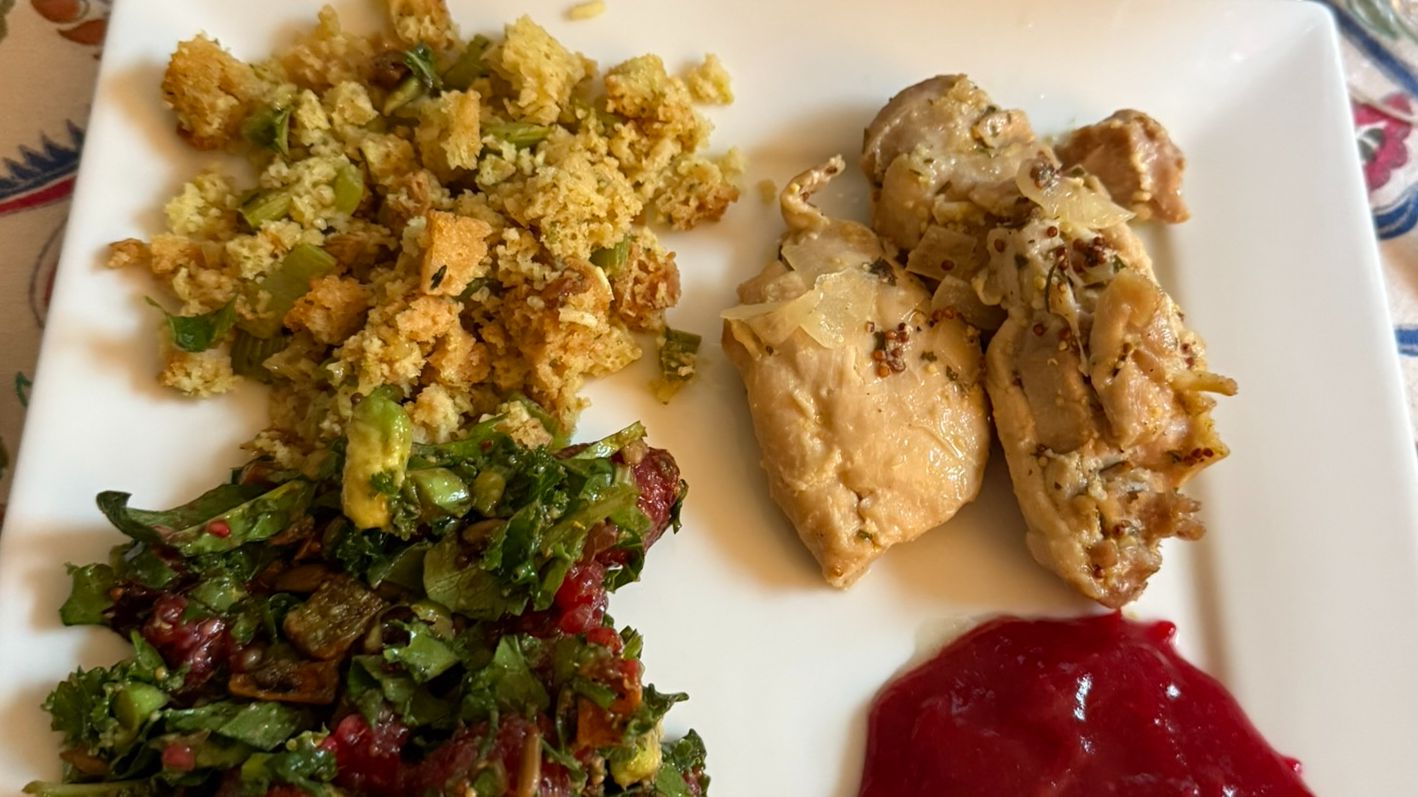
This recipe is a crowd pleaser! I’ve cooked it for holiday meals in place of a big turkey or ham, and everyone loved it. The mustard is warming and cozy, making this a great cold weather meal.
Rosemary Dijon Chicken
| Nutrients | |
|---|---|
| Calories | 295 |
| Fat | 14.3 g |
| Protein | 34.3 g |
| Carbohydrates | 8.2 g |
| Fiber | 1.8 g |
| Sugar | 2.2 g |
Ingredients:
- 6 cloves organic garlic, minced
- 1 lbs. organic pasture-raised chicken thighs
- 2 tbsp organic extra virgin olive oil
- 2 organic yellow onion, diced
- 2 tbsp organic Dijon mustard
- 2 tbsp dried rosemary
- 1 tbsp dried parsley
- 1 tsp sea salt
- 1 tsp ground black pepper
- ½ tbsp organic raw honey
- 2 springs organic rosemary
Instructions:
- Preheat the oven to 350°F.
- Press the garlic and set aside for at least 10 minutes.*
- Add the chicken and onion to a 8x8 baking dish, and drizzle with the olive oil.
- In a small bowl, mix the garlic and remaining ingredients, except the fresh rosemary.
- Coat the chicken with the mustard mixture and top with rosemary sprigs.
- Cover the dish with an upside down backing sheet to form a seal. Bake for 30 minutes, turning the chicken halfway through.
- Remove the backing sheet and bake uncovered for 10-15 minutes until slightly brown.
*Allicin is the compound responsible for garlic’s superfood qualities. When garlic is pressed/crushed, alliin (protein fragment) and alliinase (heat-sensitive enzyme) are combined, and over the space of about 10 minutes, create allicin. If you cook the garlic right after pressing, roughly 90% of the alliinase enzyme is destroyed. Waiting allows the max amount of allicin to be produced and the benefits reaped!
Leftovers
- Store in a glass container if possible
- Refrigerator: up to 5 days
- Freezer: 2 months
Anticancer Benefits
Apigenin (parsley) is a phytochemical found in many fruits, vegetables, and herbs - but some of the richest sources are parsley, chamomile and celery. It works to decrease the activity of tumor-promoting genes HIF-1 and VEGF in tissues. These genes are deeply involved in tumor survival and progression. It also inhibits the expression of some tumor genes and downregulates proteins involved in cancer cell proliferation.
Luteolin (Olive oil and Rosemary) is an antioxidant (flavonoid) found in many fruits, vegetables, and herbs which has potent anticancer properties. It is capable of inhibiting tumor growth by interacting with signaling pathways and proteins. This decreases cell proliferation and limits the formation of new blood vessels which would supply the tumor and allow for the spread of cancerous cells. Luteolin also encourages apoptosis, the natural death of abnormal cells and is being studied for combination therapies with chemo drugs to increase cancer cell sensitivity.
© 2026 Mistletoe Nutrition and Wellness LLC
Disclaimer: The information shared on this account is intended for inspirational and informational purposes only and is not a substitute for medical advice. Nothing on this account is intended to diagnose, treat, prevent, or cure any disease. Consult with your healthcare provider before making any dietary, lifestyle, or supplement changes and do not forego or delay seeking medical attention based on the information shared on this account. You acknowledge and agree that the results of any of our services, offerings, or products as described in a testimonial are not typical, are for illustrative purposes only, and cannot be guaranteed or assumed to be achievable by you. Please always consider your personal situation and do your own research.
For more anticancer recipes and lifestyle recommendations, check out my Basics of Anticancer Nutrition Course.
To learn more about oncology support, book a Discovery Call or check out my services page here.
Book a free Discovery Call to learn more.
Stay connected with news and updates!
Integrative cancer care resources, anti-cancer recipes, and whole-person health articles for those with a cancer diagnosis - at any stage of survivorship.
I don't spam, and I will never sell your information, for any reason.
