What is Oncology Nutrition?
Jun 05, 2025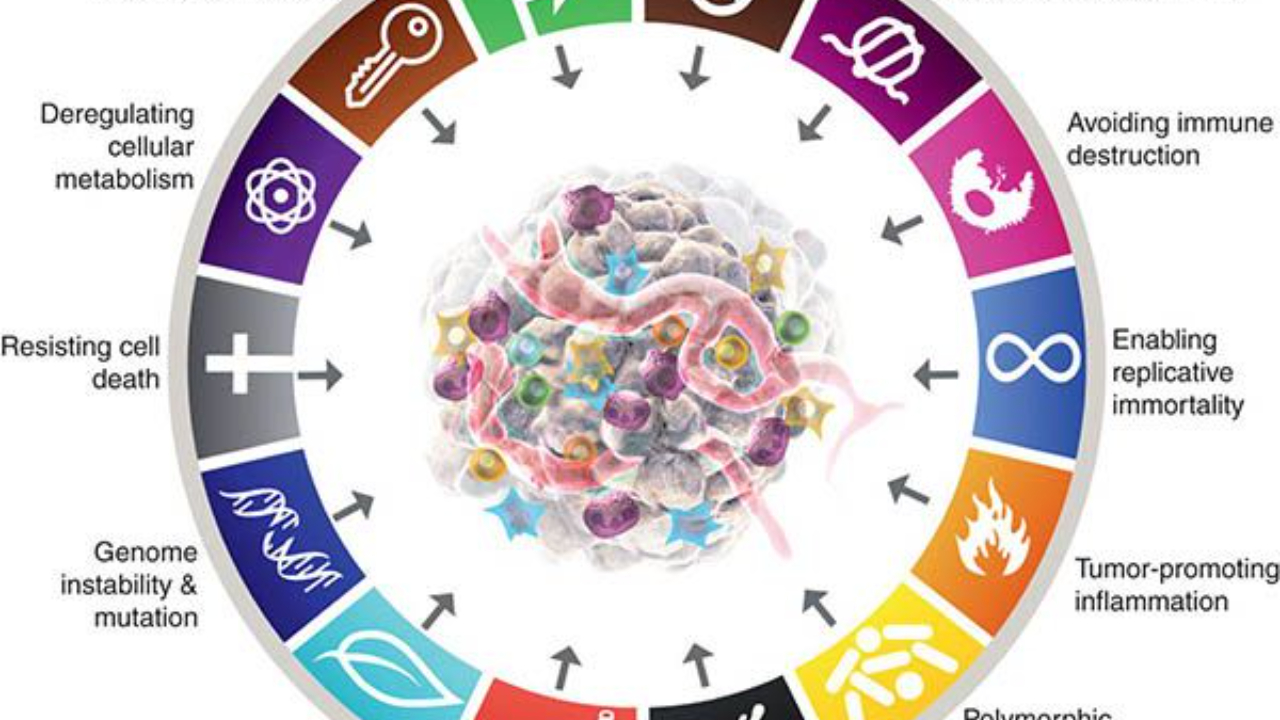
Beyond 'Eat This, Not That': What Personalized Cancer Nutrition Actually Looks Like
Cancer nutrition is so much more than “eat this, don’t eat that.”
Abnormal cells form in all areas of the body, despite a specific diagnosis such as thyroid, brain, or breast cancer. Which is why we assess your overall health in such depth.
During our Oncology Health Assessment (OHA), we review all body systems for optimal function. We assess the health of your inner and outer terrain.
Cancer is a complex disease and clever nutrient, synergist, toxin avoidance, and lifestyle strategies must be employed to combat it.
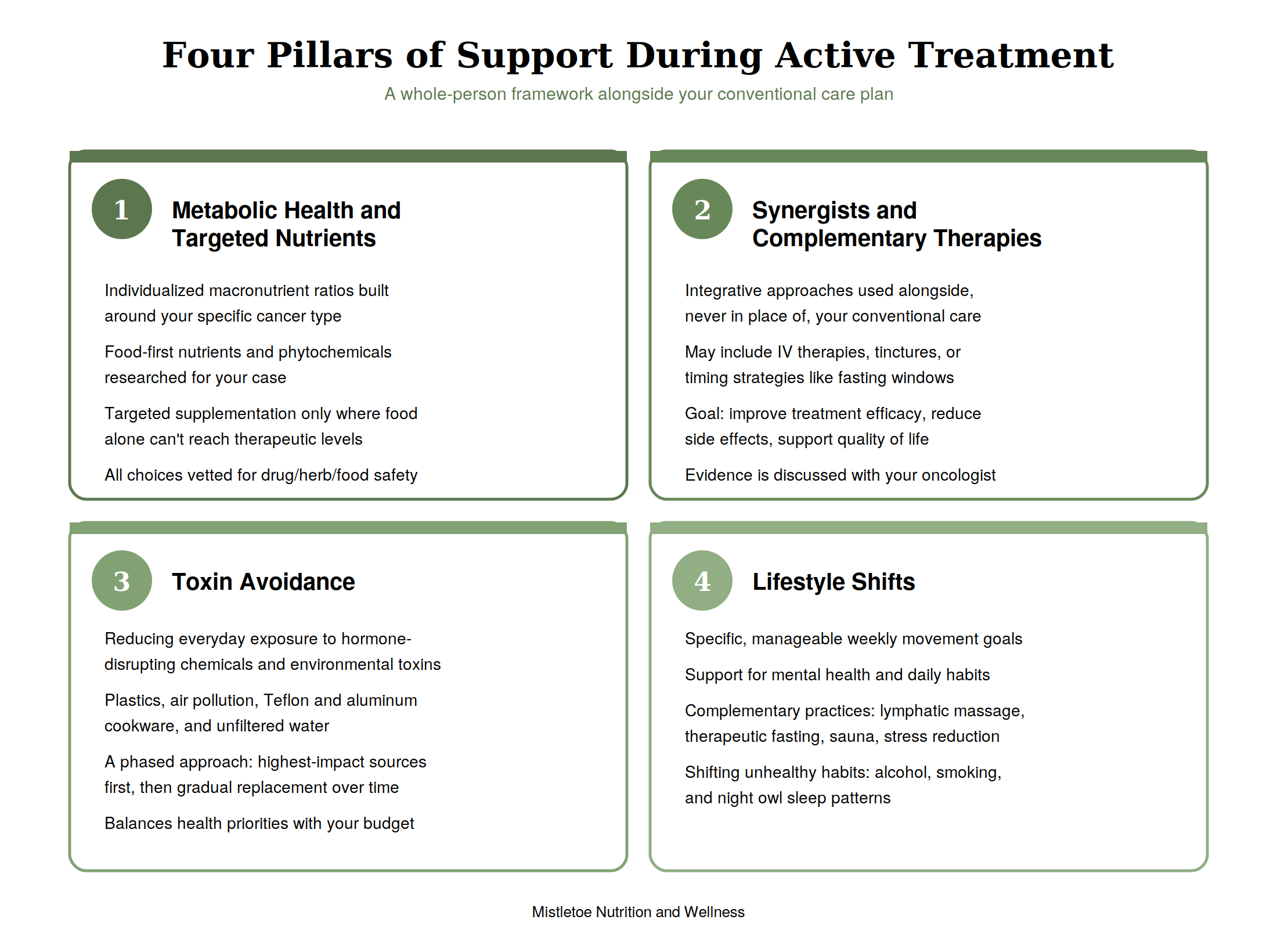
What Do I Mean by “Nutrient Strategies”?
Here’s an example from a client:
A woman with Triple Negative Breast Cancer (TBNC) is currently in treatment.
In addition to the conventional care she gets from her oncologist, we focus on a TNBC-specific diet that addresses the health issues found during her OHA, and respects her allergies, budget, and preferences.
After assessing her needs, we settle on the macronutrient ratio of 60-70% fat, 25-35% protein, and 10-15% carbohydrates (from high fiber vegetables)*.
This is important, because in the case of TNBC, excess protein in the diet will be converted to glutamate, which this type of breast cancer cell can utilize well for sustained growth.
*this ratio was built for this specific client's case and isn't a general recommendation for TNBC.
We also bring in nutrients and phytochemicals that early research suggests may act against TNBC cells in lab studies. This is alongside chemotherapy, and drug/herb/food interactions are thoroughly researched for safety.
Targeted nutrients will come from food whenever possible, however, sometimes food can’t achieve therapeutic levels, such as with curcumin.
You couldn’t (and shouldn’t) eat platefuls of turmeric in an attempt to consume enough of its active constituent, curcumin. However, a carefully chosen supplement can help you benefit from curcumin’s anti-inflammatory effects.
Another example is propolis (“bee glue”), which studies show can slow metastasis in breast cancer cells. This isn’t something you can eat, but well-chosen tinctures or third-party tested supplements can help harness its benefits.
We always prioritize food and safety first, bringing in complementary therapies such as tinctures, supplements, or IV treatments only when appropriate.
What Do I Mean by “Synergist Strategies”?
Surgery, chemotherapy, radiation, and immunotherapies are all incredible tools in modern cancer treatment. I can say from experience that they don’t always feel incredible, especially when they come with negative side effects, but they are powerful medicines.
The good news is that we are constantly trying to improve upon these therapies.
We can enhance their efficacy through synergy. Sometimes combining two chemotherapies is the key, but other times, the synergist isn’t another drug, it’s a plant extract, or the timing of administration. For instance, various chemotherapies show greater efficacy when taken in a fasted state of 13–17 hours, depending on cancer type.
For this client, we discussed the use of IV Mistletoe Therapy alongside her chemotherapy regimen. Mistletoe therapy has been a cancer treatment in other parts of the world, such as Switzerland, since 1917.
In the case of TNBC, studies show that mistletoe therapy can reduce the side-effects of chemotherapy, allowing patients to actually complete their intended regimen, and improve quality of life.
When preparing for surgery, fasting, improving diet, and utilizing natural pain and inflammation-reducing strategies can improve response to and recovery from procedures.
Surgery is a major stressor on the body, and impacts immunity and the microbiome, so improving the circumstances under which we enter the operating room are of the utmost importance.
As your Oncology Nutrition Consultant, I am also your researcher.
Conventional oncologists focus on pharmaceuticals; complementary herbal and IV therapies often fall outside their expertise. If there is sufficient evidence that a synergist could improve the efficacy of your treatment plan, we will discuss and present it to your oncologist for consideration.
What Do I Mean by “Toxin Avoidance Strategies”?
Your environment impacts your health. It is impossible to be truly healthy in an unhealthy home or workplace.
For this client, one thing we focused on was reducing xenoestrogen exposure.
Xenoestrogens are a class of chemicals that mimic estrogen and fuel tumor growth. They are found in plastics (BPA), birth control pills, hormone replacement therapies (HRT), body care products, Teflon pans, and dairy products from cows treated with growth hormones. (rBGH, BGH, bST)
It’s also unfortunate but true that many consumer products are made with, or contain carcinogenic compounds. Because toxin avoidance can be overwhelming, we take a phased approach: addressing the highest-impact sources first, then gradually replacing harmful items to protect both your health and your wallet.
What Do I Mean by “Lifestyle Strategies”?
There’s often overlap between toxin avoidance and lifestyle strategies.
However, with lifestyle strategies we typically focus on movement, habits, mental health support, and complementary therapies such as lymphatic massage, therapeutic fasting, and sauna.
For this client, we set specific weekly movement goals, worked together to limit harmful habits, and added monthly lymphatic or therapeutic massage for relaxation and circulatory support. Complementary approaches like fasting, sauna, and stress reduction play important roles here.
This is just a piece of one client’s personalized plan. Each approach takes commitment, patience, and individualized guidance.
As your Oncology Nutrition Consultant, I act as researcher and advocate, but also as a compassionate guide to help you integrate these strategies and navigate care with confidence.
As a fellow cancer survivor, I’ve been in your shoes and it is my mission to bring comfort, confidence, and agency back into your life.
We’ll examine your health through a whole-person lens, explore actionable strategies based on your cancer type, phase of survivorship, and personal needs, and build a roadmap that supports your health and happiness.
To learn more about oncology support, book a Discovery Call or check out my services page here.
To start reducing your toxic burden and adopt an anticancer lifestyle, check out my Basics of Anticancer Nutrition Course.
Citations:
- Gropper SS. The Role of Nutrition in Chronic Disease. Nutrients. 2023;15(3):664.
- Kinney N. Naturopathic Oncology: An Encyclopedic Guide for Patients & Physicians. Liaison Press; 2020: Chapter 3.
- Sun X, Wang M, Wang M, et al. Metabolic Reprogramming in Triple-Negative Breast Cancer. Front Oncol. 2020;10. doi:10.3389/fonc.2020.00428
- Arenas M, Fargas-Saladié M, Moreno-Solé M, et al. Metabolomics and triple-negative breast cancer: A systematic review. Heliyon. 2023;10(1):e23628.
- Wiggs A, Molina S, Sumner SJ, Rushing BR. A Review of Metabolic Targets of Anticancer Nutrients and Nutraceuticals in Pre-Clinical Models of Triple-Negative Breast Cancer. Nutrients. 2022;14(10):1990.
- Kabała-Dzik A, et al. Migration Rate Inhibition of Breast Cancer Cells Treated by Caffeic Acid and Caffeic Acid Phenethyl Ester. Nutrients. 2017;9(10):1144.
- Wang X, Zhang L, Si H. Combining luteolin and curcumin synergistically suppresses triple-negative breast cancer by regulating IFN and TGF-β signaling pathways. Biomedicine & Pharmacotherapy. 2024;178:117221. doi:10.1016/j.biopha.2024.117221
- Kröz M, Kienle GS, Feder G, Kaveri S, Rosenzweig S. Mistletoe: from basic research to clinical outcomes in cancer and other indications. Evid Based Complement Alternat Med. 2014;2014:987527. doi:10.1155/2014/987527
- Piao BK, Wang YX, Xie GR, et al. Impact of complementary mistletoe extract treatment on quality of life in breast, ovarian and non-small cell lung cancer patients. Anticancer Res. 2004;24(1):303-309.
- Semiglasov VF, Stepula VV, Dudov A, Lehmacher W, Mengs U. The Standardised Mistletoe Extract PS76A2 Improves QoL in Patients with Breast Cancer Receiving Adjuvant CMF Chemotherapy. Anticancer Res. 2004.
- Hong CE, Lyu SY. Mistletoe in Cancer Cell Biology: Recent Advances. Curr Issues Mol Biol. 2025;47(8):672. Published 2025 Aug 20. doi:10.3390/cimb47080672
- History - Iscador AG. Iscador AG. Published January 31, 2024. Accessed April 9, 2026. https://iscador.com/en/about-us/history/
- Bao PP, Zhao GM, Shu XO, et al. Modifiable Lifestyle Factors and Triple-negative Breast Cancer Survival: A Population-based Prospective Study. Epidemiology. 2015;26(6):909-916.
- Eslami-S Z, Majidzadeh-A K, Halvaei S, et al. Microbiome and Breast Cancer: New Role for an Ancient Population. Front Oncol. 2020;10.
- Marinac CR, Nelson SH, Breen CI, et al. Prolonged Nightly Fasting and Breast Cancer Prognosis. JAMA Oncol. 2016;2(8):1049.
- Longo VD, Mattson MP. Fasting: Molecular Mechanisms and Clinical Applications. Cell Metab. 2014;19(2):181-192.
- Intermittent Fasting Attenuates Obesity-Induced Triple-Negative Breast Cancer Progression... Nutrients. 2024;16(13):2101.
© 2025 Mistletoe Nutrition and Wellness LLC
Disclaimer: The information shared on this blog post is intended for inspirational and informational purposes only and is not a substitute for medical advice. Nothing on this blog post is intended to diagnose, treat, prevent, or cure any disease. Consult with your healthcare provider before making any dietary, lifestyle, or supplement changes and do not forego or delay seeking medical attention based on the information shared on this account. You acknowledge and agree that the results of any of our services, offerings, or products as described in a testimonial are not typical, are for illustrative purposes only, and cannot be guaranteed or assumed to be achievable by you. Please always consider your personal situation and do your own research.
Book a free Discovery Call to learn more.
Stay connected with news and updates!
Integrative cancer care resources, anti-cancer recipes, and whole-person health articles for those with a cancer diagnosis - at any stage of survivorship.
I don't spam, and I will never sell your information, for any reason.
